
Apache Hop 2.20 is here, and it’s the biggest Hop release to date. 30 contributors, more than 650 merged pull requests. A large part of that work came from the Putki team, alongside contributions from the wider community.
From the Putki team
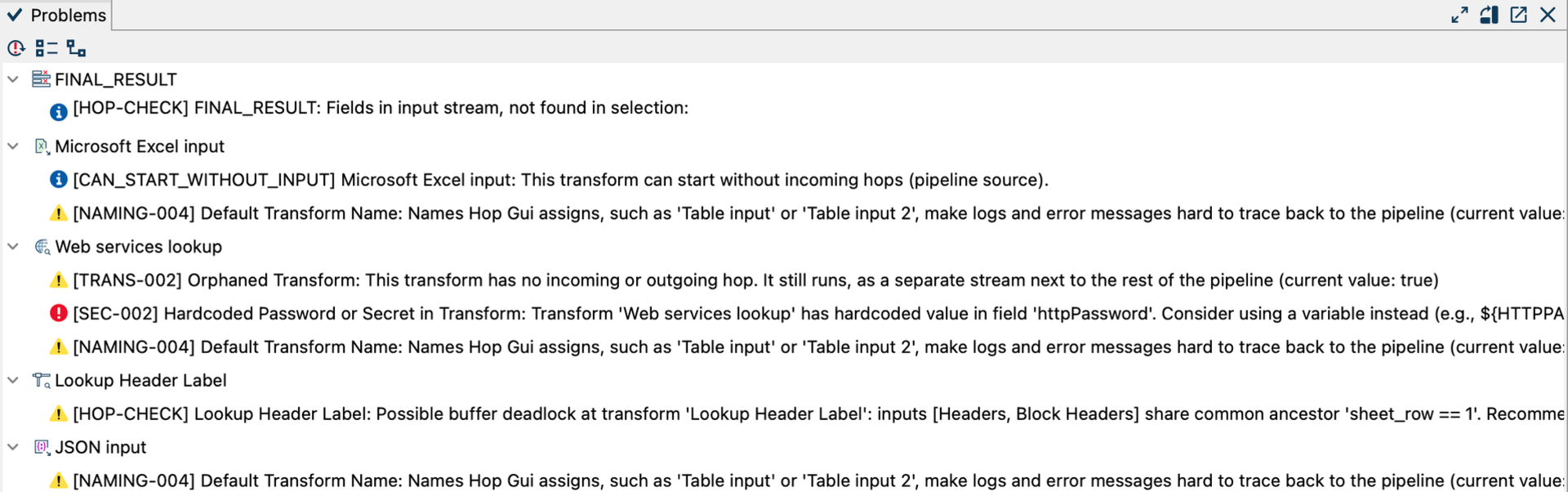
A lot of the work from our team in this release focuses on helping teams build and maintain larger Hop projects. One example is the new linting engine. Hop lint checks pipelines, workflows and metadata against configurable rules, both in the GUI and from the command line. It can also produce SARIF or JSON output, making it easy to integrate into CI pipelines.
Security also received a number of changes. Hop Web's embedded server API is now closed by default and follows the same authorization rules as the web interface. TLS verification is enabled by default and XML processing no longer resolves external entities. Existing installations that expose the Hop Web API may need to update their configuration after upgrading.
Git Input is a new transform that reads repository data directly into your pipelines. It connects to GitHub, GitLab, Bitbucket and compatible platforms and gives you access to commits, pull requests, issues and other repository objects as rows. If you’re already using Hop to move and transform data, you can now pull in your development activity the same way.
The new dbt action lets workflows run dbt Core commands directly from a Hop workflow, without switching tools or writing wrapper scripts. If you’re already orchestrating your pipelines in Hop, you can now include dbt transformations in the same workflow.
Graph database support has also been redesigned. Neo4j connections have become a generic graph database connection layer that can support multiple graph databases. Existing Neo4j metadata is migrated to the new metadata type, but projects should verify that existing graph connections and the transforms or actions using them still resolve correctly after upgrading.
This release also introduces the first set of AI building blocks: a text chunker, an embedding transform, a Vector value type, pgvector upsert and search, and a Structured extract transform for pulling typed fields out of unstructured text. All of them work as native pipeline steps and share a single AI Provider connection.
Finally, one performance fix will matter to anyone already running Java 21. A scheduling issue that caused pipelines to busy-wait between transforms has been resolved, restoring expected execution performance on Java 21.
From the community
Hop 2.20 also ships an AI Assistant built into the GUI. It’s off by default, when you enable it, it can read your pipelines and suggest changes. Nothing is applied without your review, and every change can be undone.
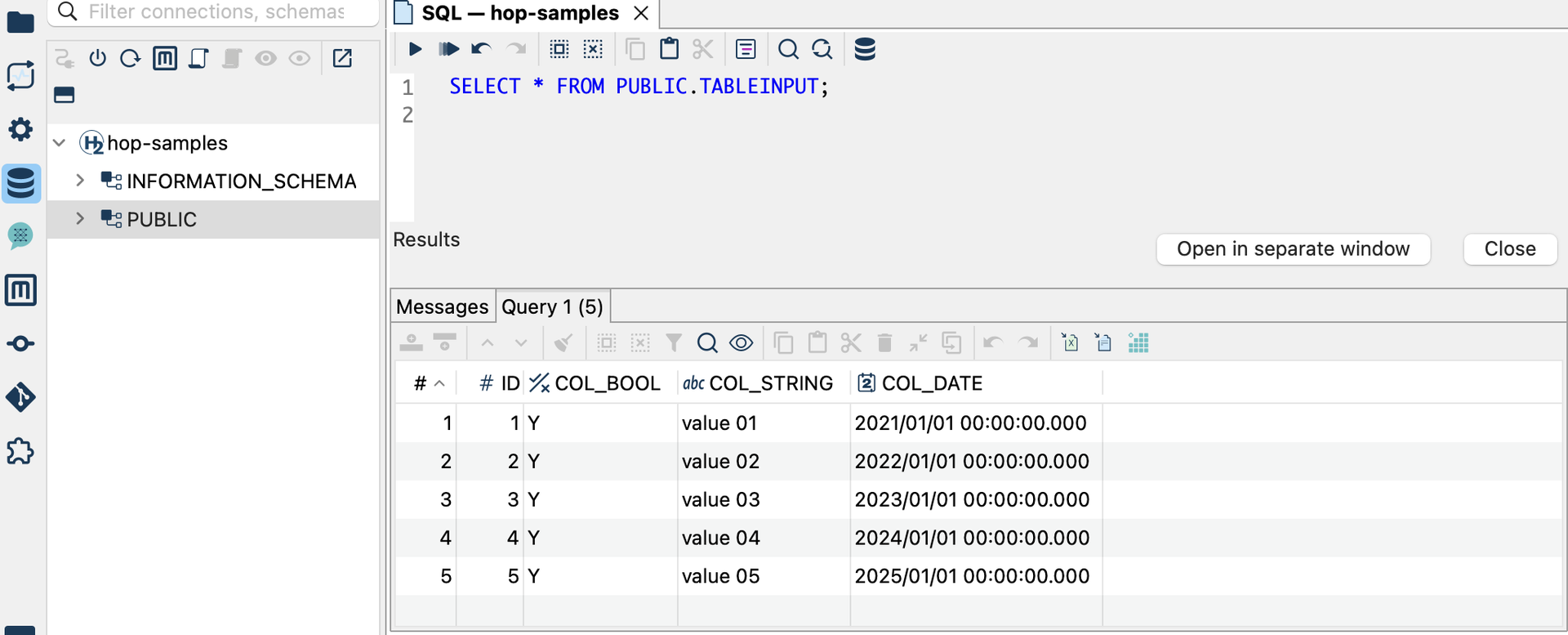
Another addition is the new Database Perspective. It provides a dedicated place to browse relational database connections, connect or disconnect from them, open SQL editors, preview data and generate DDL without leaving the perspective.
Lakehouse support takes a significant step forward with new Lake Table Input and Output transforms for Apache Iceberg that no longer depend on Spark. Parquet output can now write Hive-style partitions, Parquet files can be previewed directly in the Explorer perspective and native Spark pipelines gain additional deployment options, including YARN support.
Several new transforms and workflow actions stand out. Watch Files can monitor directories for new, changed or deleted files while making sure files are complete before processing. Database Value Validation checks incoming rows against the target schema before writing to the database. Multi Mapping brings back the multi-input, multi-output mapping style that long-time PDI users will recognize. It lets you define a mapping that accepts data from multiple sources and routes output to multiple targets, which the standard mapping transform doesn’t support.
Virtual file systems also received several additions from the community. SMB shares, FTPS connection metadata, HDFS, and a VFS File Explorer all land in this release. Hop Server and Hop Web now give each execution or web session its own VFS namespace, which keeps file system state isolated between runs.
There are also many smaller improvements aimed at day-to-day work in Hop GUI. You can turn a chain of transforms into a mapping in one step, search across all configured projects, organize transforms with an optional palette tree and configure the Hop environment outside the installation directory through the new setup tools.
For the complete list of changes, migration notes and upgrade considerations, see the full Apache Hop 2.20 release notes: https://hop.apache.org/blog/2026/11/hop-2.20.0/.